Wisteria sinensis
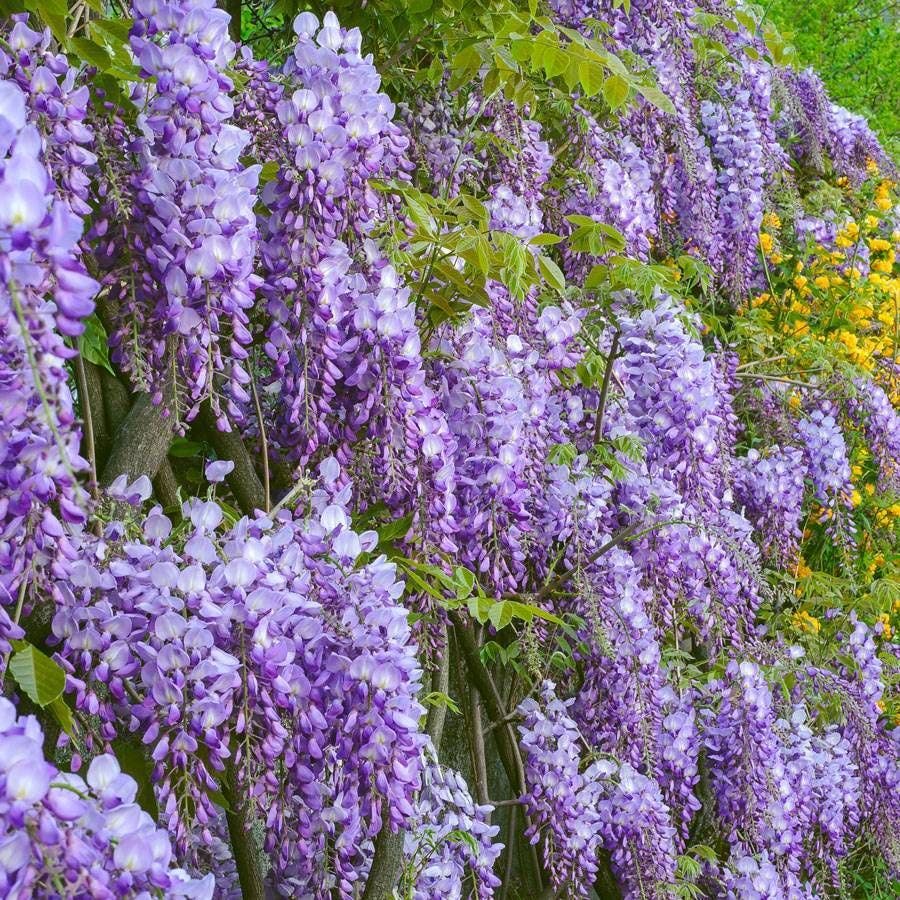
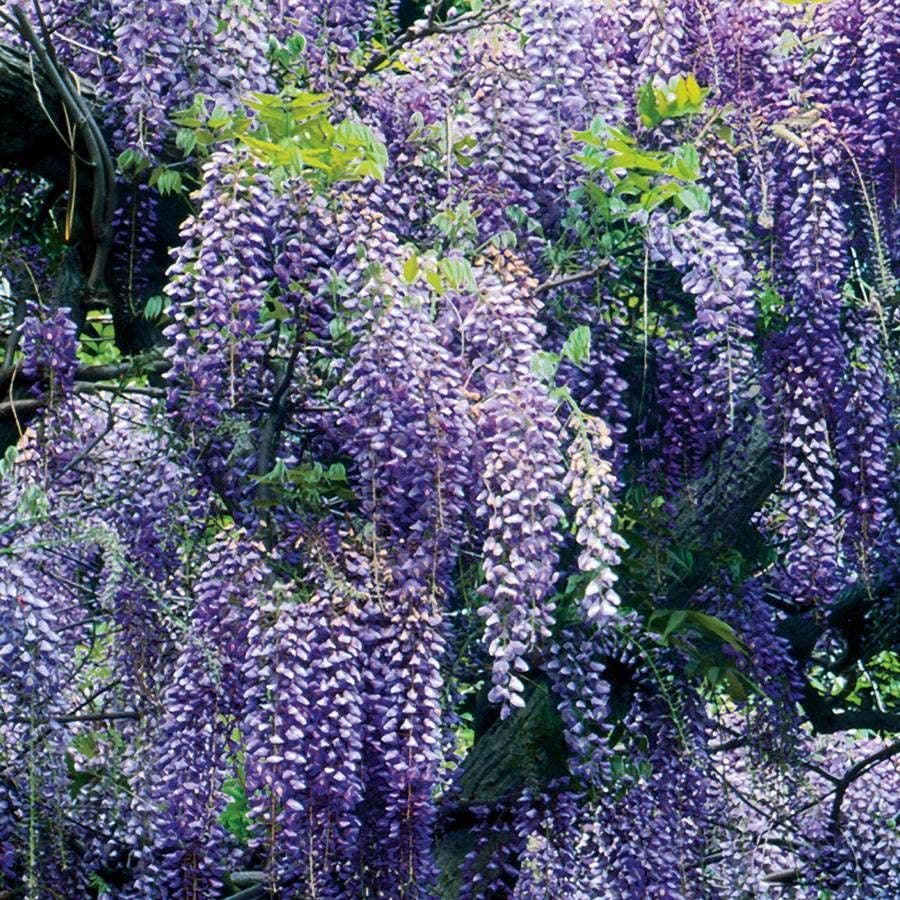
Wisteria sinensis, commonly known as Chinese wisteria, is a deciduous perennial vine offering 3 seasons of interest, blooming in late spring in a spectacular display of masses of dramatic drooping clusters dense with pea-like, mauve to lavender flowers. The sweetly fragrant flowers attract butterflies and are followed by attractive, velvety, bean-like seed pods in autumn that linger into winter.
A long-lived woody vine, Wisteria sinensis has a vigorous, fast growth rate and a climbing habit of twining stems covered in pinnate, dark green leaves. It's perfect for covering arbors and trellises and climbing walls and fences. But its trunk-like stems can also be trained into a small tree.
Wisteria prefers full sun to dappled shade and humusy, fertile, medium moisture, well-draining soil with a slightly acidic pH. Once established, the plant can tolerate a little drought, but it should never be allowed to sit in soggy soil. The plant is deer resistant.
Prune wisteria in late winter to maintain its shape and size and promote blooms. Remove half of the previous year's growth, leaving a few buds on each stem.
Original: $20.95
-65%$20.95
$7.33Product Information
Product Information
Shipping & Returns
Shipping & Returns
Description
Wisteria sinensis, commonly known as Chinese wisteria, is a deciduous perennial vine offering 3 seasons of interest, blooming in late spring in a spectacular display of masses of dramatic drooping clusters dense with pea-like, mauve to lavender flowers. The sweetly fragrant flowers attract butterflies and are followed by attractive, velvety, bean-like seed pods in autumn that linger into winter.
A long-lived woody vine, Wisteria sinensis has a vigorous, fast growth rate and a climbing habit of twining stems covered in pinnate, dark green leaves. It's perfect for covering arbors and trellises and climbing walls and fences. But its trunk-like stems can also be trained into a small tree.
Wisteria prefers full sun to dappled shade and humusy, fertile, medium moisture, well-draining soil with a slightly acidic pH. Once established, the plant can tolerate a little drought, but it should never be allowed to sit in soggy soil. The plant is deer resistant.
Prune wisteria in late winter to maintain its shape and size and promote blooms. Remove half of the previous year's growth, leaving a few buds on each stem.