Magnolia Moonglow®
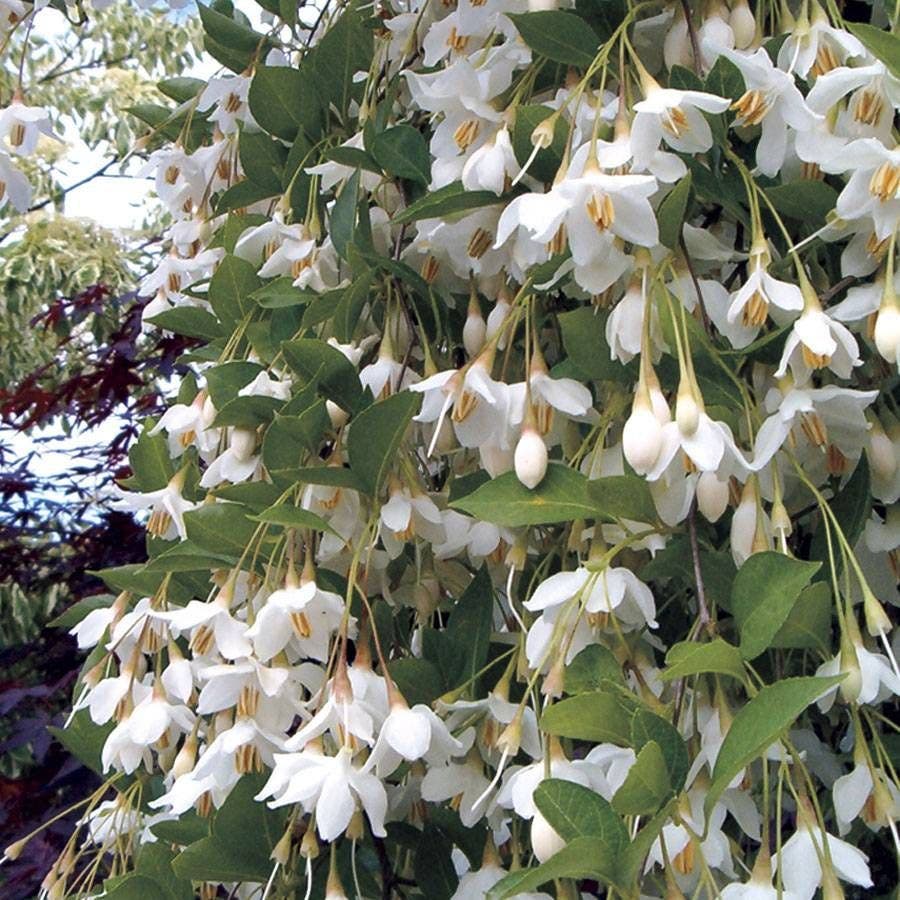
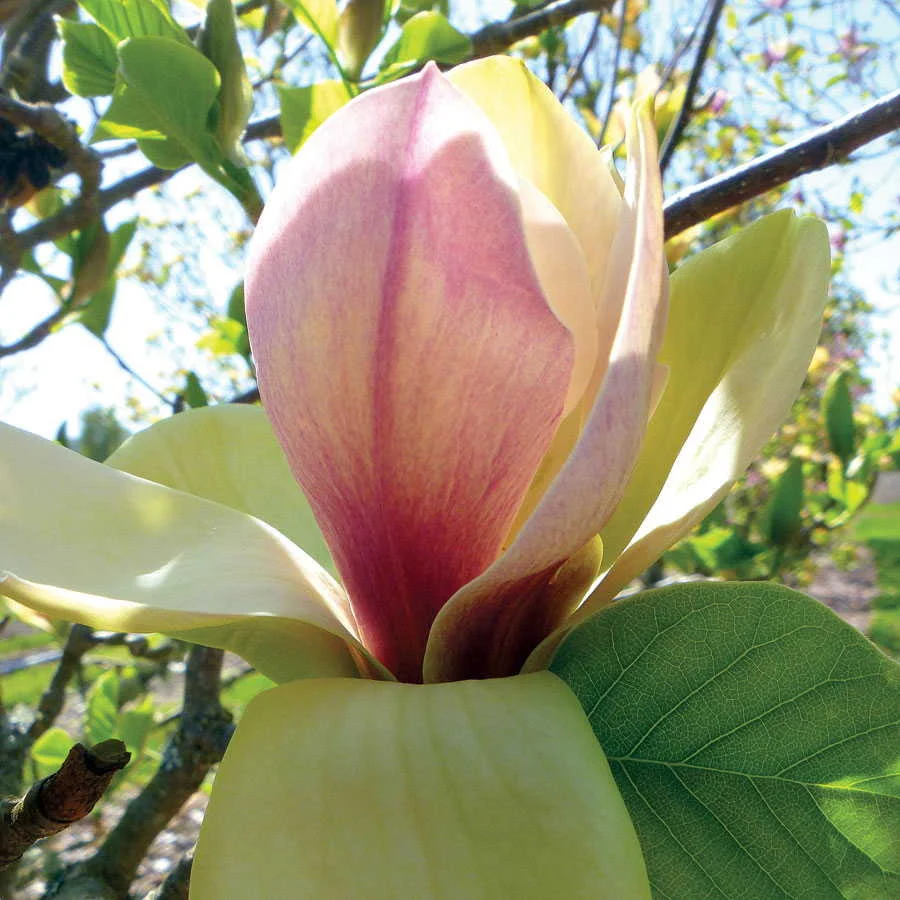
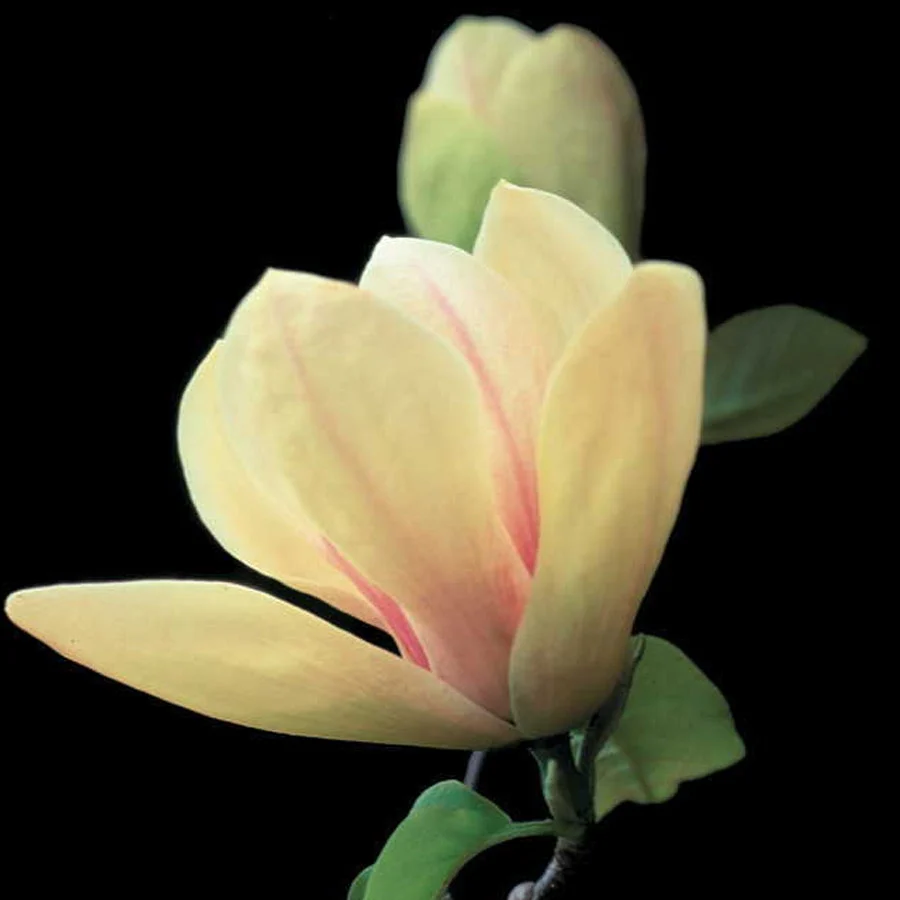
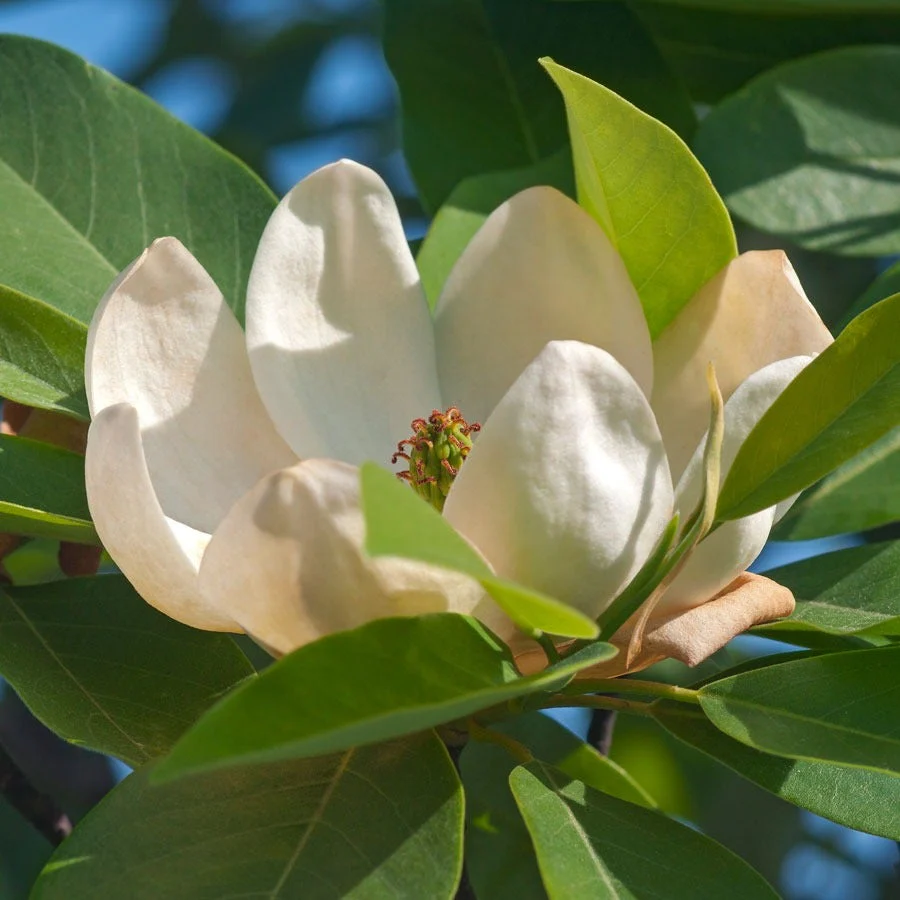
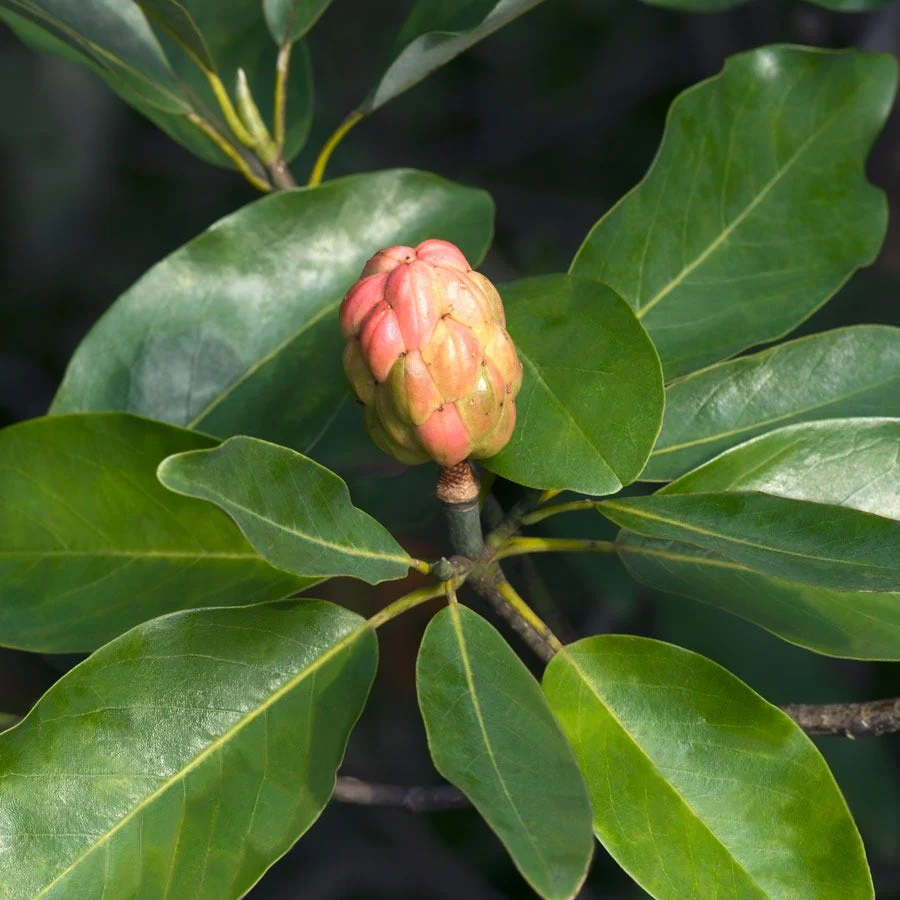
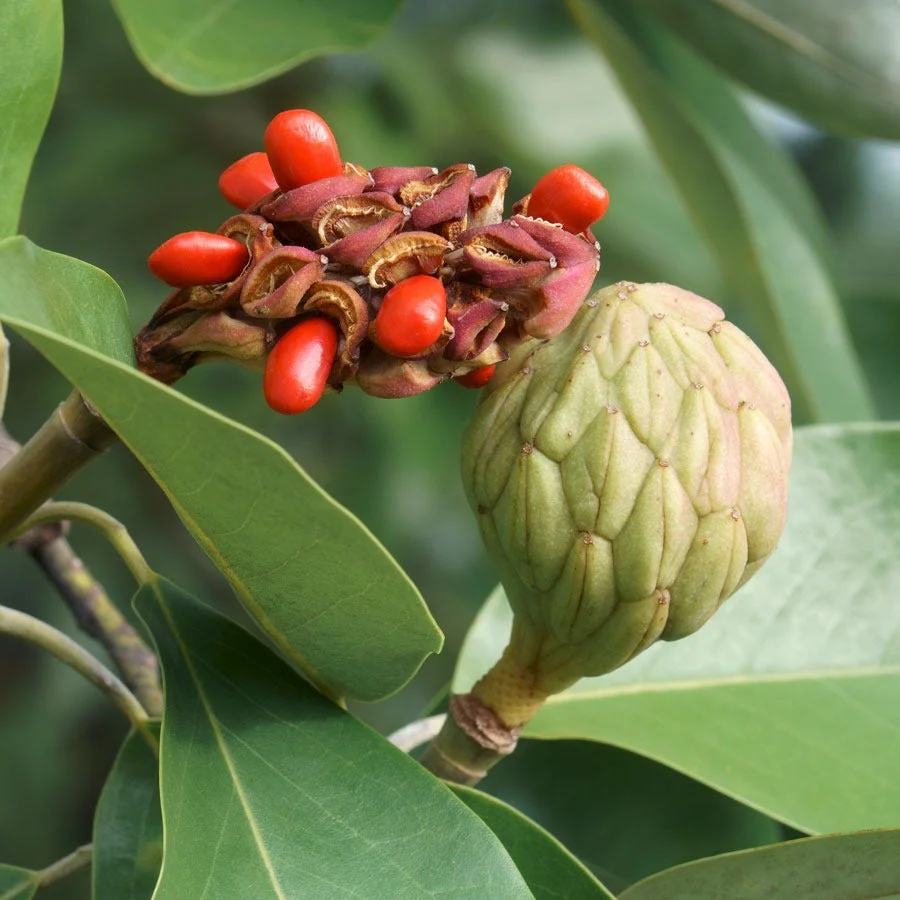
Magnolia Moonglow® is a medium-sized flowering evergreen tree (semi-evergreen in colder regions) known for its vase-shaped form, reaching a height of 15 to 35 feet and a spread of 10 to 20 feet. This magnolia captivates with its fragrant ivory blossoms, which emit a delightful lemon scent. The flowers are set against glossy dark green leaves with eye-catching silvery undersides that glimmer in the breeze. The waxy, cup-shaped flowers, measuring 2 to 3 inches, open from large buds in mid-spring to early summer and may continue to bloom sporadically throughout the summer, attracting butterflies. In the fall, cone-like fruits with bright red seeds provide a vital food source for migrating birds.
Known scientifically as Magnolia virginiana, or sweet bay magnolia, Moonglow (also called M. virginiana 'Jim Wilson') has an upright habit and a vigorous growth rate. The trunk often develops a gracefully twisted and lightly gnarled appearance, adding to its unique charm. This magnolia is a wonderful choice as a specimen tree and works well in lawns, near foundations, by patios, ponds, and streams, or along woodland edges. It pairs particularly well with rhododendrons and azaleas.
Sweet bay magnolia is an easy-to-grow, low-maintenance tree that thrives in sunny to dappled shade locations with rich, moist, well-draining soil. It also tolerates wet, boggy conditions and performs admirably in clay soils.
Indigenous to the southeastern United States, Magnolia virginiana naturally grows in swamps, low woods, savannas, and coastal areas. Native plants like this magnolia are both beautiful and environmentally friendly. They are adapted to the local climate and soil conditions, thriving without the need for fertilizers or extra watering once established. These plants also serve as natural pest controls, reducing the need for pesticides in the garden. Using native plants in landscaping promotes biodiversity, providing essential shelter and food for wildlife and pollinators, thus enriching the garden's ecosystem.
Product Information
Product Information
Shipping & Returns
Shipping & Returns
Description
Magnolia Moonglow® is a medium-sized flowering evergreen tree (semi-evergreen in colder regions) known for its vase-shaped form, reaching a height of 15 to 35 feet and a spread of 10 to 20 feet. This magnolia captivates with its fragrant ivory blossoms, which emit a delightful lemon scent. The flowers are set against glossy dark green leaves with eye-catching silvery undersides that glimmer in the breeze. The waxy, cup-shaped flowers, measuring 2 to 3 inches, open from large buds in mid-spring to early summer and may continue to bloom sporadically throughout the summer, attracting butterflies. In the fall, cone-like fruits with bright red seeds provide a vital food source for migrating birds.
Known scientifically as Magnolia virginiana, or sweet bay magnolia, Moonglow (also called M. virginiana 'Jim Wilson') has an upright habit and a vigorous growth rate. The trunk often develops a gracefully twisted and lightly gnarled appearance, adding to its unique charm. This magnolia is a wonderful choice as a specimen tree and works well in lawns, near foundations, by patios, ponds, and streams, or along woodland edges. It pairs particularly well with rhododendrons and azaleas.
Sweet bay magnolia is an easy-to-grow, low-maintenance tree that thrives in sunny to dappled shade locations with rich, moist, well-draining soil. It also tolerates wet, boggy conditions and performs admirably in clay soils.
Indigenous to the southeastern United States, Magnolia virginiana naturally grows in swamps, low woods, savannas, and coastal areas. Native plants like this magnolia are both beautiful and environmentally friendly. They are adapted to the local climate and soil conditions, thriving without the need for fertilizers or extra watering once established. These plants also serve as natural pest controls, reducing the need for pesticides in the garden. Using native plants in landscaping promotes biodiversity, providing essential shelter and food for wildlife and pollinators, thus enriching the garden's ecosystem.