Hidcote Blue Lavender Seeds
Lavender angustifolia is one of the richest in essential oils, meaning more fragrance power both fresh and dried. And this Hidcote Blue has a more erect, compact habit and darker flowers, so its perfect for hedges.
Fresh flowers can be crystalized and used in candies and cakes; dried flowers are used in potpourris and satchets; oils are used in creams and perfumes. And these are only some of the more common uses - imagination can create endless more.
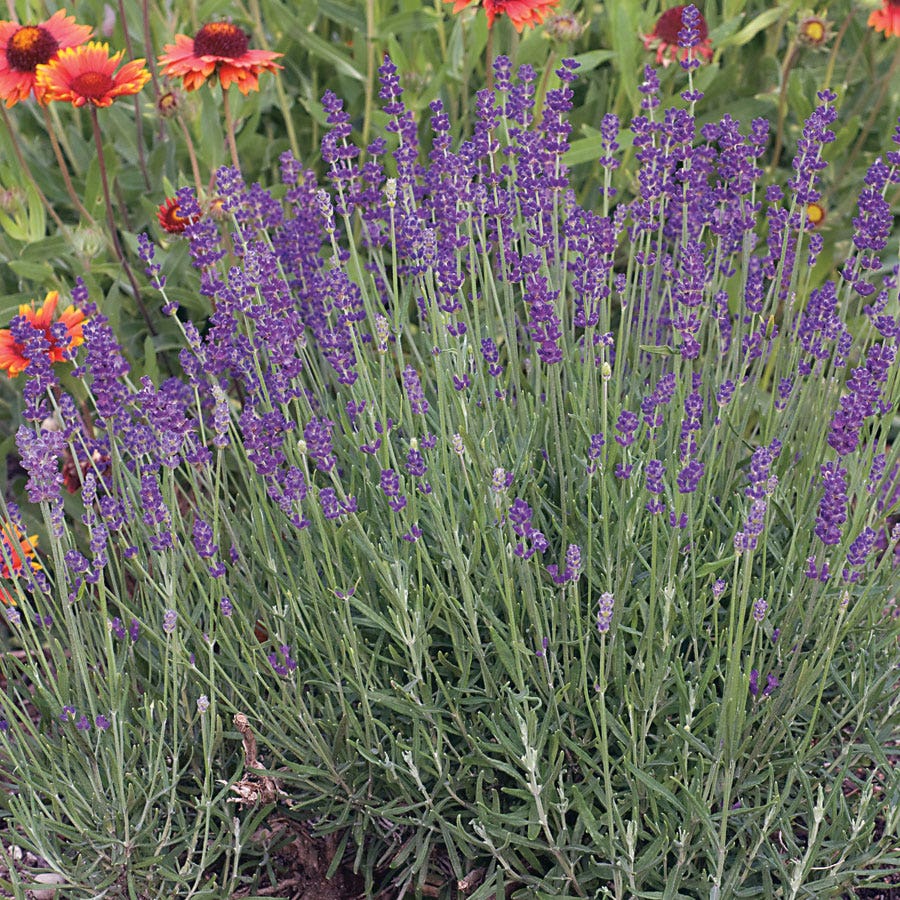
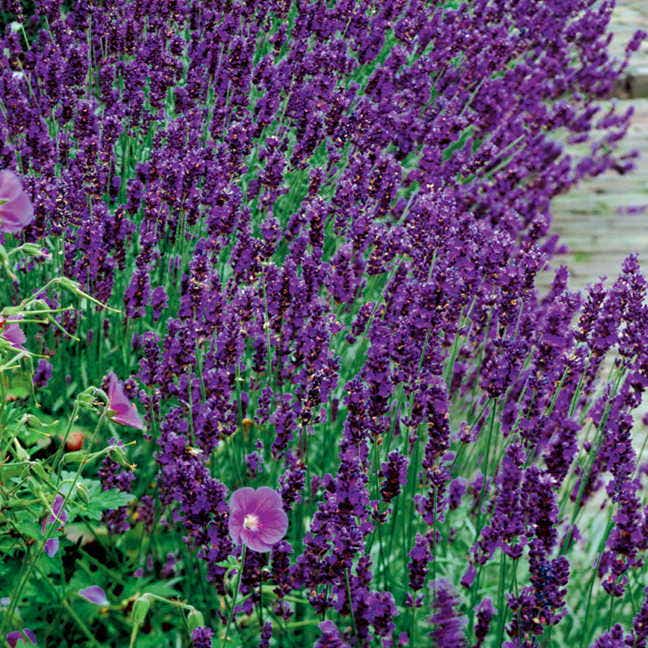
An evergreen perennial, Lavender Hidcote Blue has a subtle blue-green coloring and sweet fragrance. Reaching 12 to 18 inches high and wide, it boasts 2½-inch, linear, downy leaves on strong stems. The leaves first open white, then turn a pale gray-blue-green color. Stalks of the deepest purple flowers grow up to 14 inches tall.
Grow in a well-drained, neutral to alkaline soil in an open, sunny spot. Trim back in spring to encourage bushier growth; also deadhead after flowering.
Original: $6.95
-65%$6.95
$2.43Product Information
Product Information
Shipping & Returns
Shipping & Returns
Description
Lavender angustifolia is one of the richest in essential oils, meaning more fragrance power both fresh and dried. And this Hidcote Blue has a more erect, compact habit and darker flowers, so its perfect for hedges.
Fresh flowers can be crystalized and used in candies and cakes; dried flowers are used in potpourris and satchets; oils are used in creams and perfumes. And these are only some of the more common uses - imagination can create endless more.
An evergreen perennial, Lavender Hidcote Blue has a subtle blue-green coloring and sweet fragrance. Reaching 12 to 18 inches high and wide, it boasts 2½-inch, linear, downy leaves on strong stems. The leaves first open white, then turn a pale gray-blue-green color. Stalks of the deepest purple flowers grow up to 14 inches tall.
Grow in a well-drained, neutral to alkaline soil in an open, sunny spot. Trim back in spring to encourage bushier growth; also deadhead after flowering.